Product
Start with one class,
build it up step by step.
Follow this class, understand this reading, clear up this question — every step stays with you and joins up into your own body of knowledge.
For students
In class: follow along, and ask without hesitating
The teacher says a sentence, and your language follows right below it; tap the line you didn't get and ask the AI — no need to interrupt the class.
-
자, 오늘은 도시 열섬 현상부터 보겠습니다.
Right — today we'll start with the urban heat island effect.
-
같은 날 같은 시각인데도, 도심하고 교외는 기온이 다르게 나와요.
Same day, same hour, and yet downtown and the suburbs come out at different temperatures.
After class: readings in another language, made readable
Put the handout and the class transcript into a notebook: the AI marks the key points, and hard words get a small question mark — tap it for the explanation.
Day to day: one step at a time, no last-minute cramming
Your timetable goes into the calendar automatically, and one sentence adds an event; set a goal and it breaks it into a small step for each day.
For teachers
Lesson prep: start from your own handout
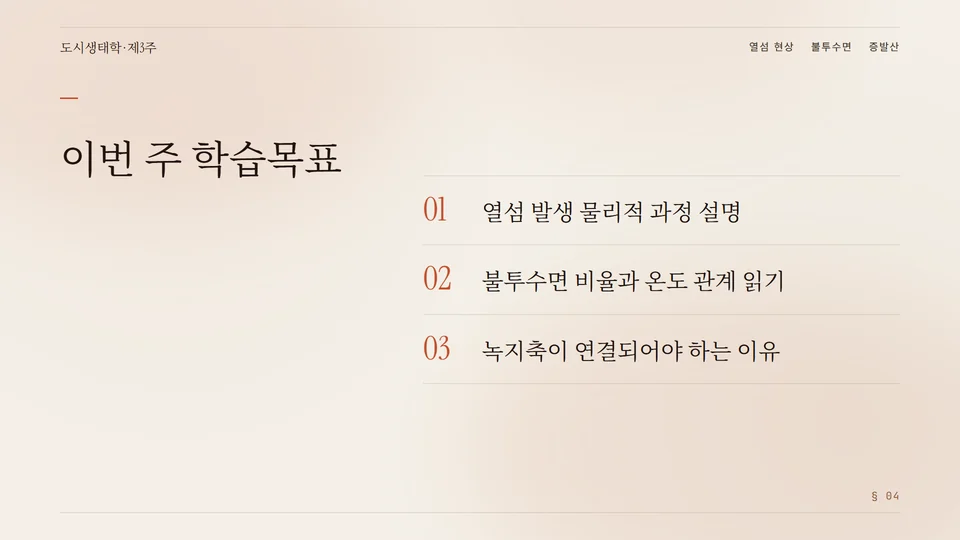
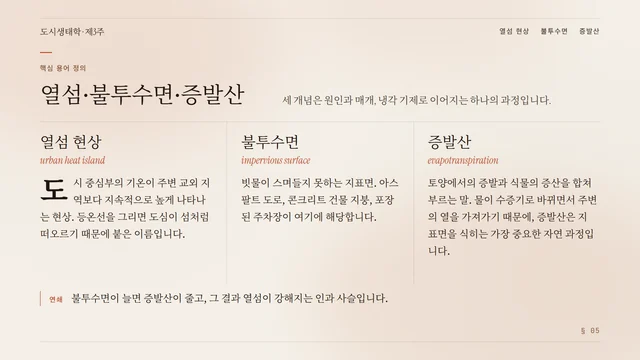
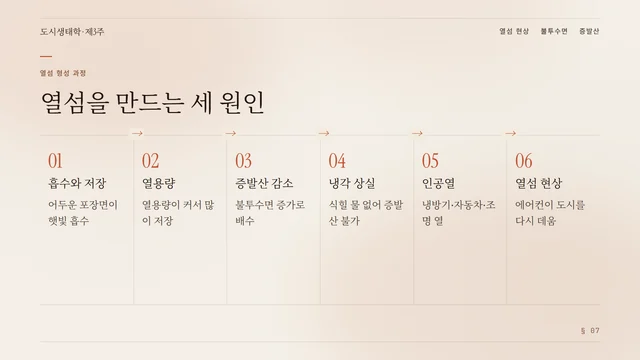
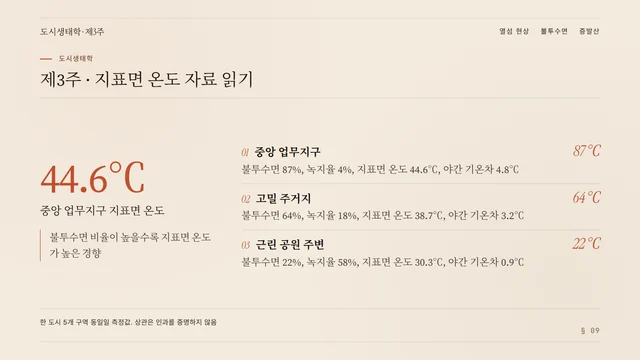
Drop in your handout and get slides you can teach with; if a slide isn't right, tell the AI in one sentence — and export to PowerPoint when you're done.
After class: students' questions, answered from what you taught
When students ask what the class covered or what a term means, the assistant answers from the classes they took and shows where it came from.
Why is the heat island effect stronger at night?
The urban heat island effect is stronger at night because urban surfaces (like asphalt and concrete) store more heat during the day and release it slowly after sunset, while natural surfaces (like soil or grass) cool down faster.
⋯
As shown in your class data:
“Asphalt and concrete store more heat than soil or grass, absorbing heat during the day and releasing it slowly at night.”
⋯
Five areas
- My Courses Understand every sentence the teacher says; the whole class is still there afterwards. View details →
- Studio Drop in a handout and get slides you can teach with. View details →
- Assistant Ask about your classes and materials; it answers from your own things. View details →
- Calendar Classes, to-dos and moods,all on one calendar. View details →
- Learn Put everything you need to read in a notebook, View details →
On your computer, the web and your phone
One account opens on a Windows computer, in the browser and on your phone; on the computer and on Android, subtitles can even float over other apps.
Try a demo class first
No sign-up — open it and walk through a whole class from start to finish.